Customization
Strategic Customization: The Art of Tailoring Microsoft Dynamics 365 F&O for Competitive Advantage
Moving Beyond "Vanilla": How to Intelligently Extend Your ERP to Perfectly Fit Your Business Without Compromising Innovation
Customization
Strategic Customization: The Art of Tailoring Microsoft Dynamics 365 F&O for Competitive Advantage
Moving Beyond "Vanilla": How to Intelligently Extend Your ERP to Perfectly Fit Your Business Without Compromising Innovation
Customization
At Rekaz Core, we are masters of this art. We don’t just customize code; we architect strategic extensions. Our goal is to mold D365 F&O into the perfect digital reflection of your business logic, while ensuring it remains a robust, upgradable, and future-proof platform.
The High Stakes of Getting Customization Wrong
Poor customization strategy leads to the “ERP graveyard” of failed systems:
- Upgrade Hell: A heavily customized system becomes so entangled that upgrades are delayed for years or cost millions, locking you out of new features, security patches, and AI capabilities.
- Performance Decay: Unoptimized custom code drags down system performance, frustrating users and harming productivity.
- Vendor Lock-In: You become hostage to the original developers, as no one else can unravel the complex web of customizations.
- Broken Integrations: Custom objects that don’t follow Microsoft’s patterns break standard integrations and third-party add-ons.
- Sky-High TCO: The total cost of ownership soars due to ongoing maintenance, specialized developer support, and missed innovation.
Our Philosophy: The Four Principles of Strategic Customization
We guide every customization decision through a strict filter:
- Configure First, Customize Last: We exhaust every native configuration, personalization, and workflow rule before considering code.
- Extend, Don’t Modify: We never alter Microsoft’s core code. We build alongside it using approved extension points, keeping the core pristine.
- Business Value is the Only Justification: Every customization must solve a documented, quantified business problem or enable a strategic capability. No “nice-to-haves.”
- Future-Proof by Design: We build using Microsoft’s latest tools and patterns (like Extension Classes and Chain of Command) to ensure compatibility and upgradability.
Our Customization Toolbox: The Right Tool for Every Job
We apply a tiered approach, using the least invasive method possible to achieve the required outcome.
Tier 1: Configuration & Personalization (No Code)
For changes to forms, views, and basic business rules.
- Personalization: Allowing end-users to modify their own workspace (hide fields, add tabs) without affecting others.
- Form & Workspace Configuration: Using built-in tools to rearrange fields, add quick tabs, and modify form layouts.
- Business Rules & Workflows: Leverating the powerful, no-code workflow editor to automate approvals and notifications.
Tier 2: Metadata Extensions (Low-Impact Code)
For adding fields, tables, and simple logic.
- Adding Fields: Extending existing tables with new fields (e.g., adding a “Customer Tier” field to the CustTable) that behave like native fields.
- Creating New Tables: Building complementary tables for ancillary data that relate to core entities.
- Simple UI Logic: Using event handlers to enable/disable fields or set default values based on simple conditions.
Tier 3: Logic Extensions (Pro-Code for Business Logic)
For complex, unique business rules and processes.
- Chain of Command (CoC): The gold standard. We wrap Microsoft’s methods to execute custom logic before, after, or instead of the standard code, without touching the original.
- Event Handlers: Subscribing to system events (e.g., onSalesOrderInserted) to trigger custom logic in response to standard processes.
- Business Events: Publishing or consuming business events for decoupled, service-oriented integrations.
Tier 4: Deep Customization & Integration (Specialized)
For revolutionary changes or deep integrations.
- Custom Services/APIs: Building new web endpoints to expose your custom logic or data to other systems.
- Overlayering (The Last Resort): Modifying Microsoft’s source code directly. We treat this as a major architectural decision, used only when no extension point exists for a critical, non-negotiable requirement.
Real-World Examples of Strategic Customization
Scenario 1: Complex Commission Calculation for a Sales Org
- Challenge: A manufacturer has a multi-tiered, product-family-based commission structure that native D365 cannot model.
- Our Approach: We extended the sales order and invoice tables with custom fields to hold commission metadata. We used a Chain of Command on the sales posting routine to call our custom commission calculation engine. The core sales process remains untouched and upgradable.
Scenario 2: Unique Lot Traceability for a Food & Beverage Company
- Challenge: The client must track “parent lots” (e.g., a batch of milk) through multiple splitting and blending processes, creating “child lots” (cheese, yogurt), beyond standard lot functionality.
- Our Approach: We created new custom tables to manage the parent-child lot genealogy. We used event handlers on inventory transactions to automatically create records in our custom tables. We built a custom Power BI report for traceability views. The core inventory module remains standard.
Scenario 3: Automated Project Revenue Recognition for a Professional Services Firm
- Challenge: The firm needs to recognize revenue based on a custom “percent-of-survey-completion” model, not standard time-or-materials.
- Our Approach: We extended the project module with custom fields and created a custom periodic process (batch job) that calculates recognition amounts. We used a data entity extension to feed these custom amounts into the general ledger. The core project accounting logic is preserved.
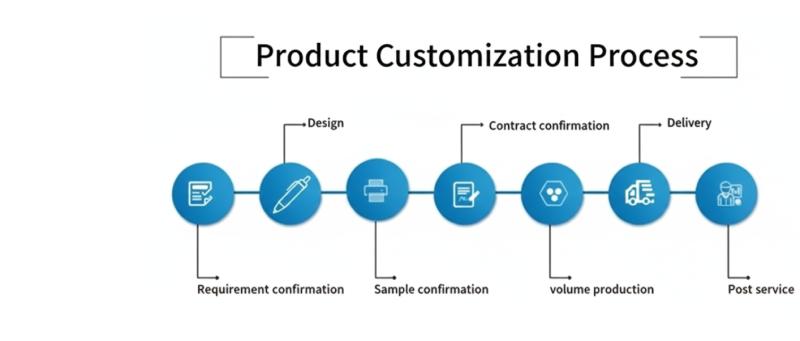
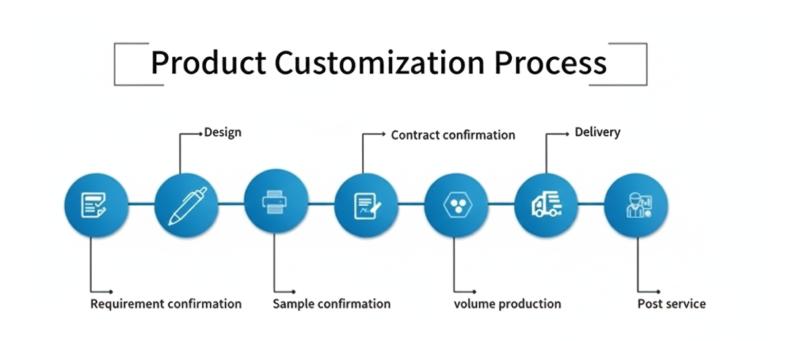
Our Proven Customization Delivery Framework
To ensure success, we follow a disciplined process:
- Requirements Deep-Dive: We don’t just document what is needed, but why. We challenge requirements to find potential native solutions.
- Solution Design Review (SDR): We present a technical design document specifying the exact extension pattern, impact on upgradeability, and test plan. You sign off before any code is written.
- Development in Sandbox: We build in isolated development environments, following peer-reviewed code standards.
- Rigorous Testing: Customizations undergo unit, integration, and user acceptance testing. We specifically test the “upgrade path” using Microsoft’s test frameworks.
- Deployment & Knowledge Transfer: We deploy using Azure DevOps pipelines and provide complete documentation to your team.
Why Rekaz Core is Your Trusted Customization Partner
Customization is our core competency, not a side service.
- Architectural Discipline: Our leads are Microsoft-certified solution architects who enforce strategic patterns.
- Upgrade Expertise: We have a dedicated team that manages complex upgrades for heavily customized systems. We know the pitfalls because we’ve navigated them.
- Transparent Governance: We provide a “Customization Impact Scorecard” for every request, showing estimated maintenance cost and upgrade complexity.
- Long-Term Partnership: We maintain the customizations we build, ensuring they evolve cleanly with your business and the platform.
Conclusion: Customization is a Strategic Superpower—When Done Right
Microsoft Dynamics 365 F&O is designed to be tailored. The power lies not in avoiding customization, but in mastering it. Strategic customization transforms your ERP from a generic business tool into a proprietary asset that codifies your unique way of winning in the market.
Let’s build your advantage, without building your legacy.